Taughannock Falls
215 ft · 0.75 mi flat trail
Taller than Niagara. Flat gravel trail. Zero excuses.
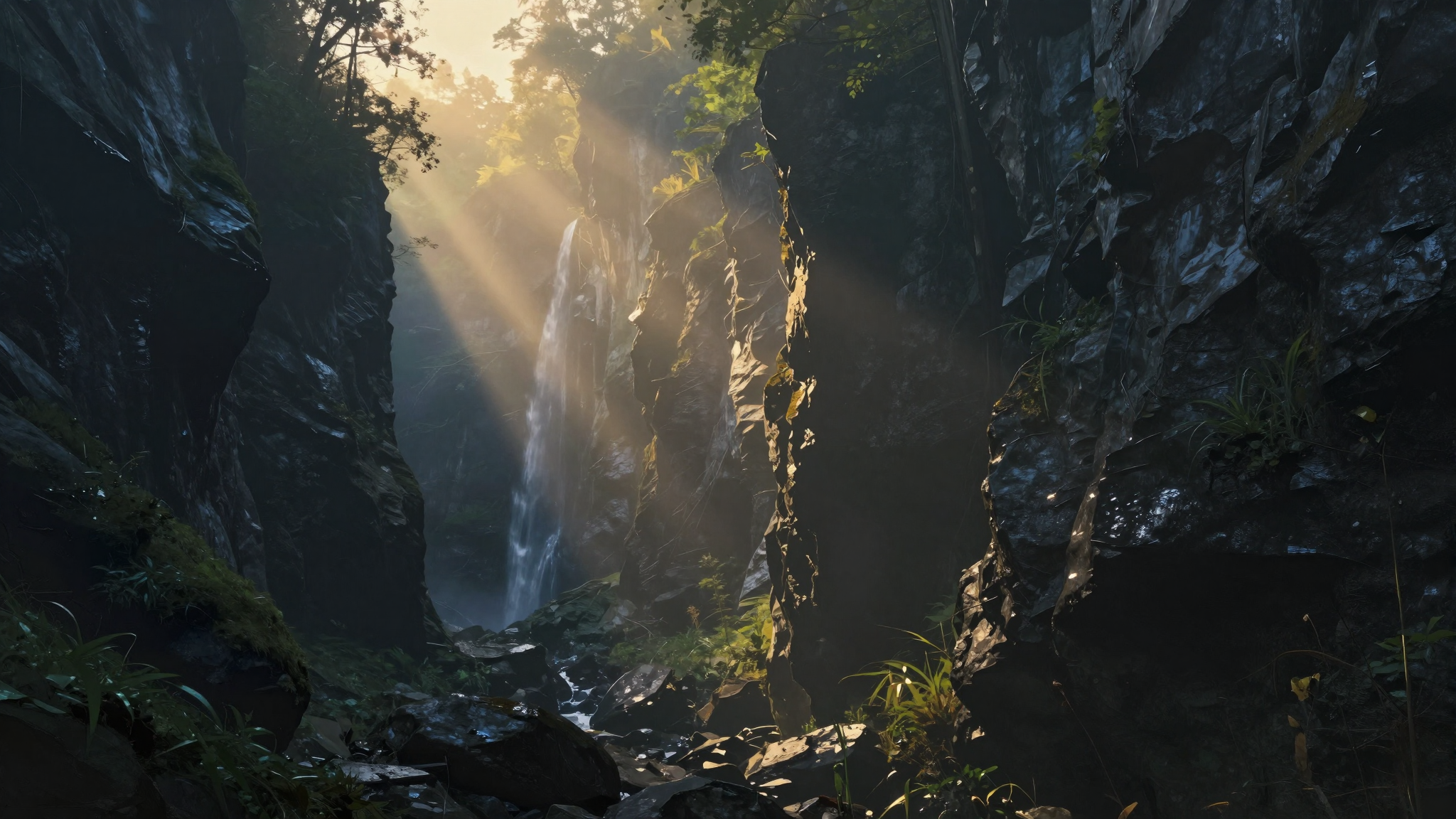
She said waterfalls. I said New Brunswick. Guess where we're going.
Somewhere between "that could be nice" and "I already booked the Hampton Inn," this became a real trip. Seven days. Two states nobody drives through on purpose. More waterfalls than either of us can name.
I asked the same question to six different AI models. "Plan a week-long road trip to the Finger Lakes for someone who loves hiking, someone who doesn't, and neither of them gives a damn about Riesling."
Claude showed up first with a clean itinerary. ChatGPT wrote a novel. Gemini gave me two answers that contradicted each other. Perplexity cited its sources like a nervous grad student. The second Gemini included LaTeX formulas for calculating golden hour shutter speeds at specific latitudes. One of them provided GPS coordinates to nine decimal places — sub-millimeter accuracy for a parking lot.
They mostly agreed on the important stuff, which is more than you can say for most planning committees. Here's the trip they designed.
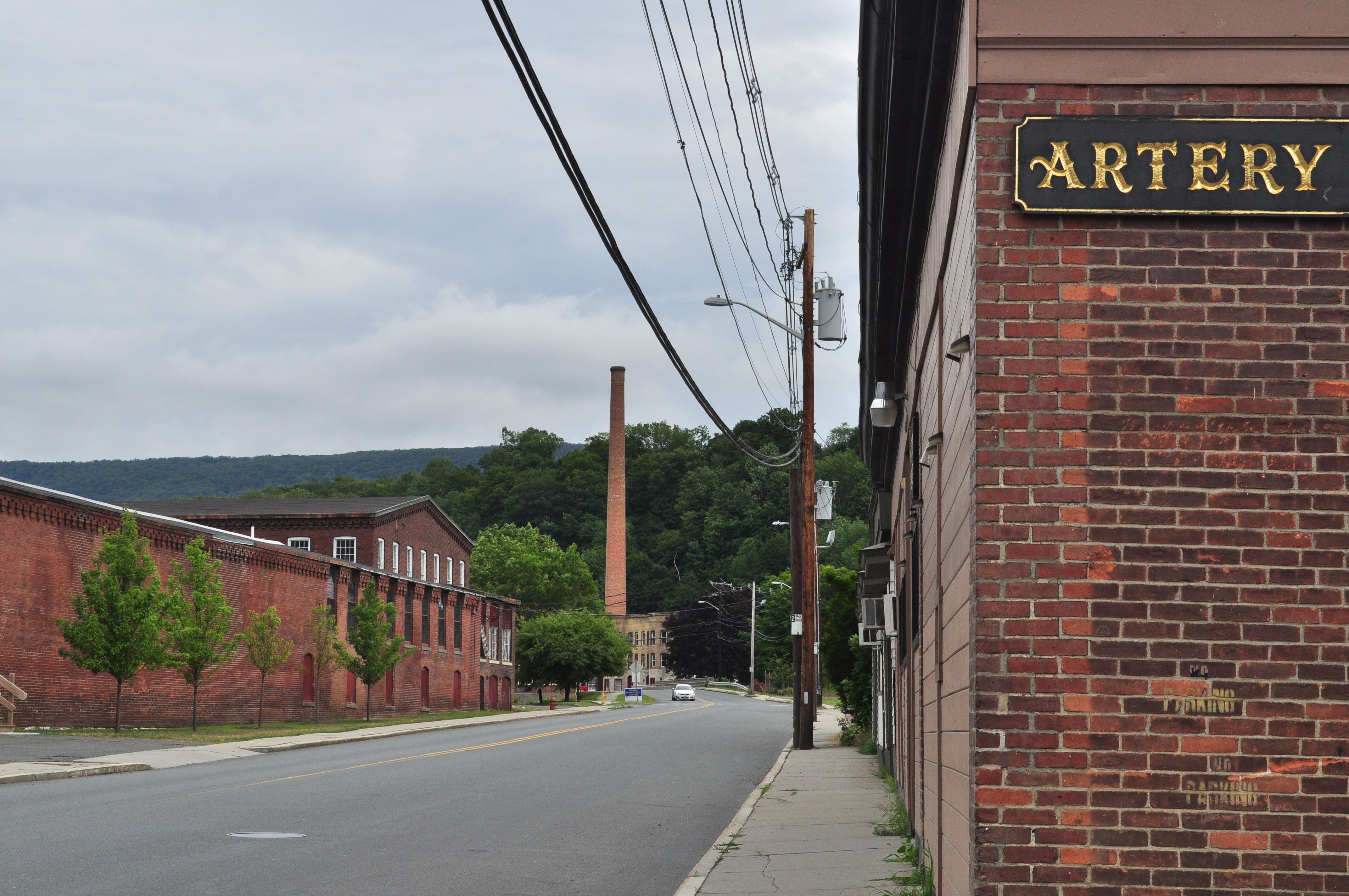
The Mohawk Trail was America's first designated scenic highway. 1914. Before the national parks had a system, before Route 66 had a song, this was the road people drove just to drive it.
You cross the Connecticut River out of New Hampshire and the land opens up in a way that doesn't happen in New England. The Hoosac Valley stretches out below the Hairpin Turn like somebody unrolled a carpet. Massachusetts gets real wide real fast when you stop using the Pike.
By Williamstown you've forgotten you're headed somewhere. That's the point.
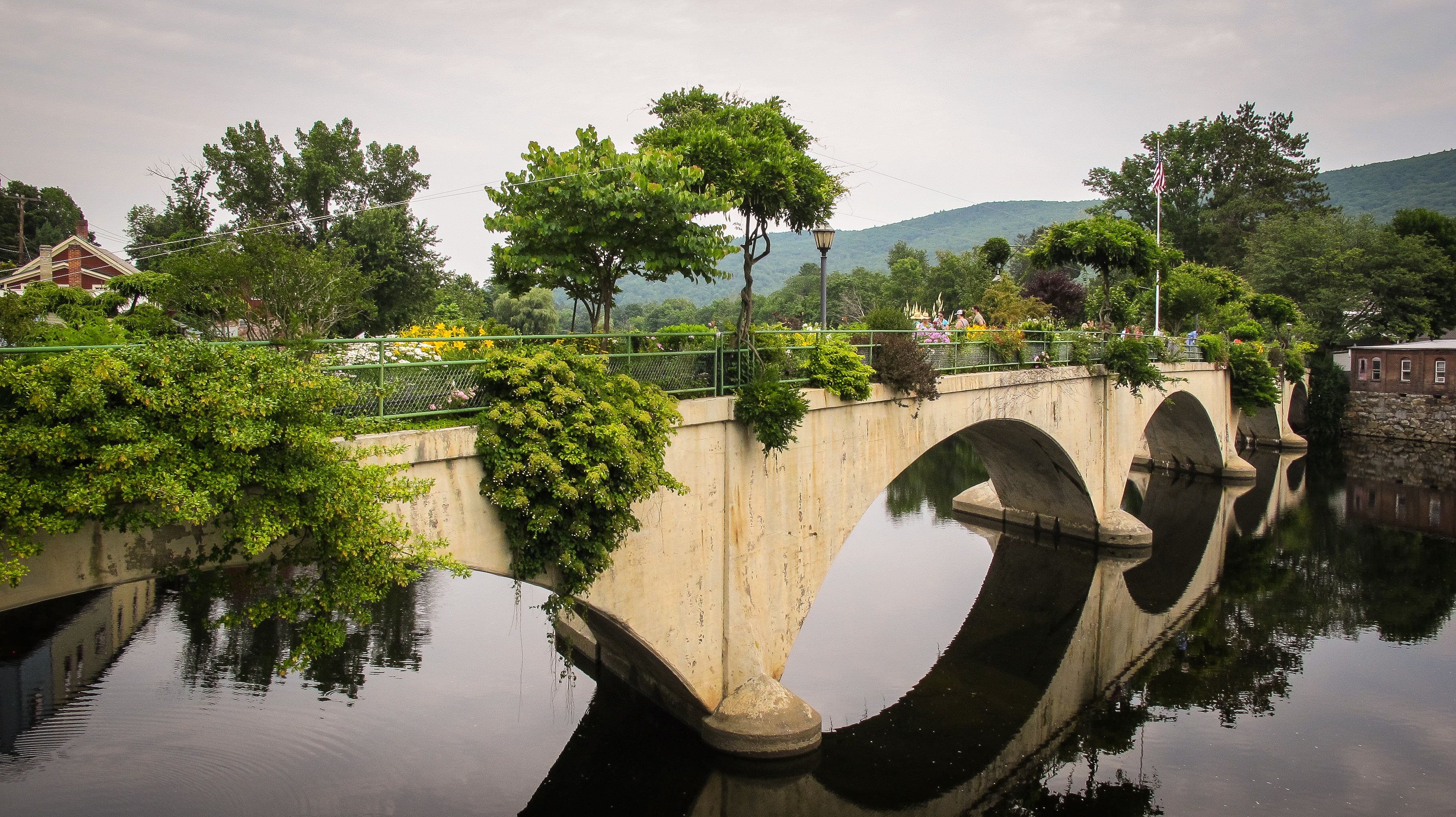
A 1908 trolley bridge that lost its trolley and gained 500 species of flowers. Four hundred feet of elevated garden spanning the Deerfield River in Shelburne Falls, Massachusetts. It's the kind of thing that sounds fake until you're standing on it.
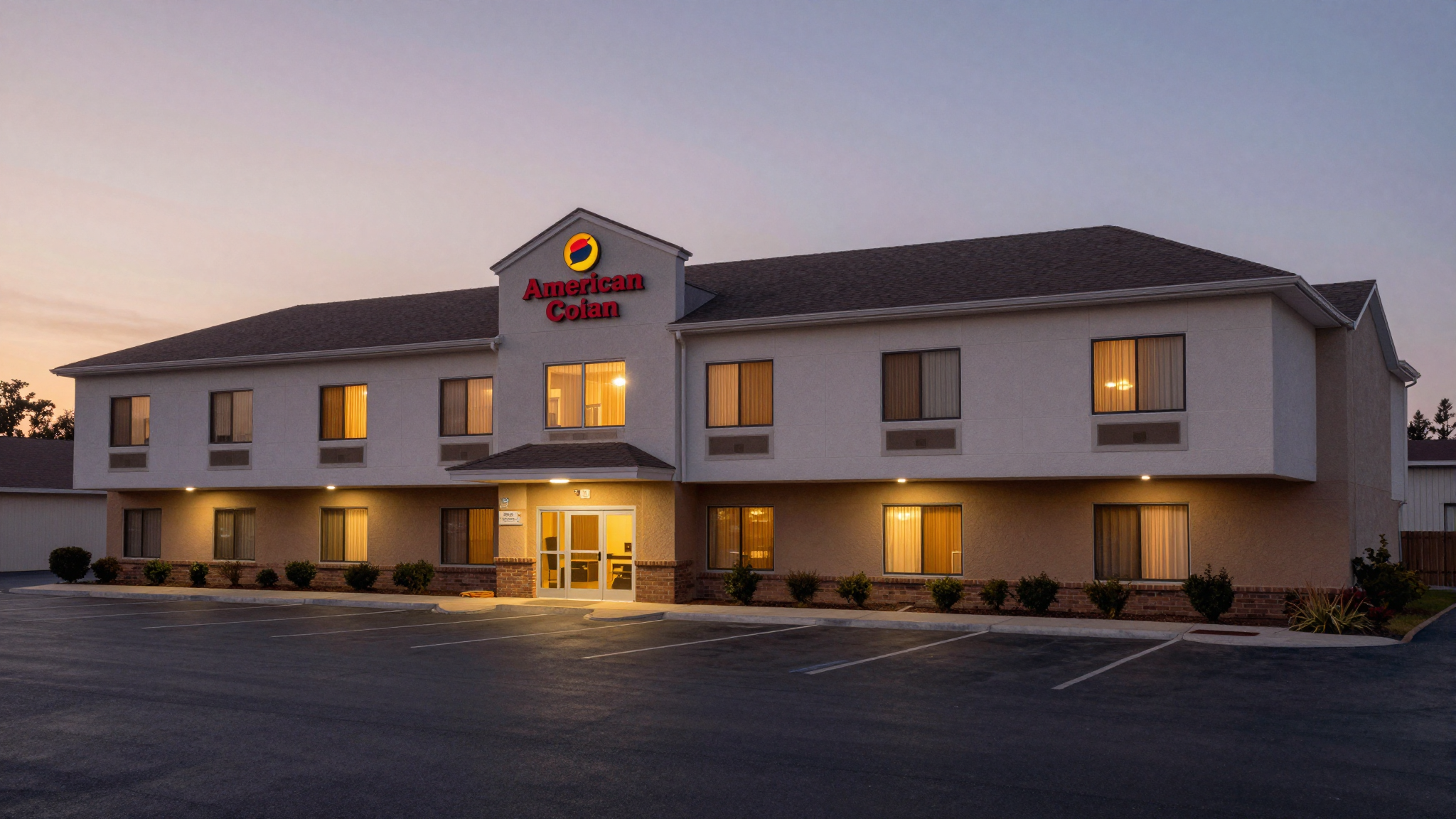
Every travel blog written by someone under thirty says you should stay at a converted barn with a communal breakfast table where strangers ask how you slept. No.
Hampton Inn. Whirlpool room. Free breakfast. Sixty-six rooms. Indoor pool. The parking lot is flat and the ice machine works.
Here's what a Hampton Inn doesn't have: personality. And that's the entire selling proposition. Nobody knocks on your door to offer you locally foraged granola. Nobody leaves a handwritten note. Nobody asks about your journey. You walk in, the room looks like every other room, and your nervous system finally unclenches.
The whirlpool room isn't indulgence. It's infrastructure. After a day of gorge trails, hot water isn't optional — it's how you convince your legs to do it again tomorrow. We budget accordingly.
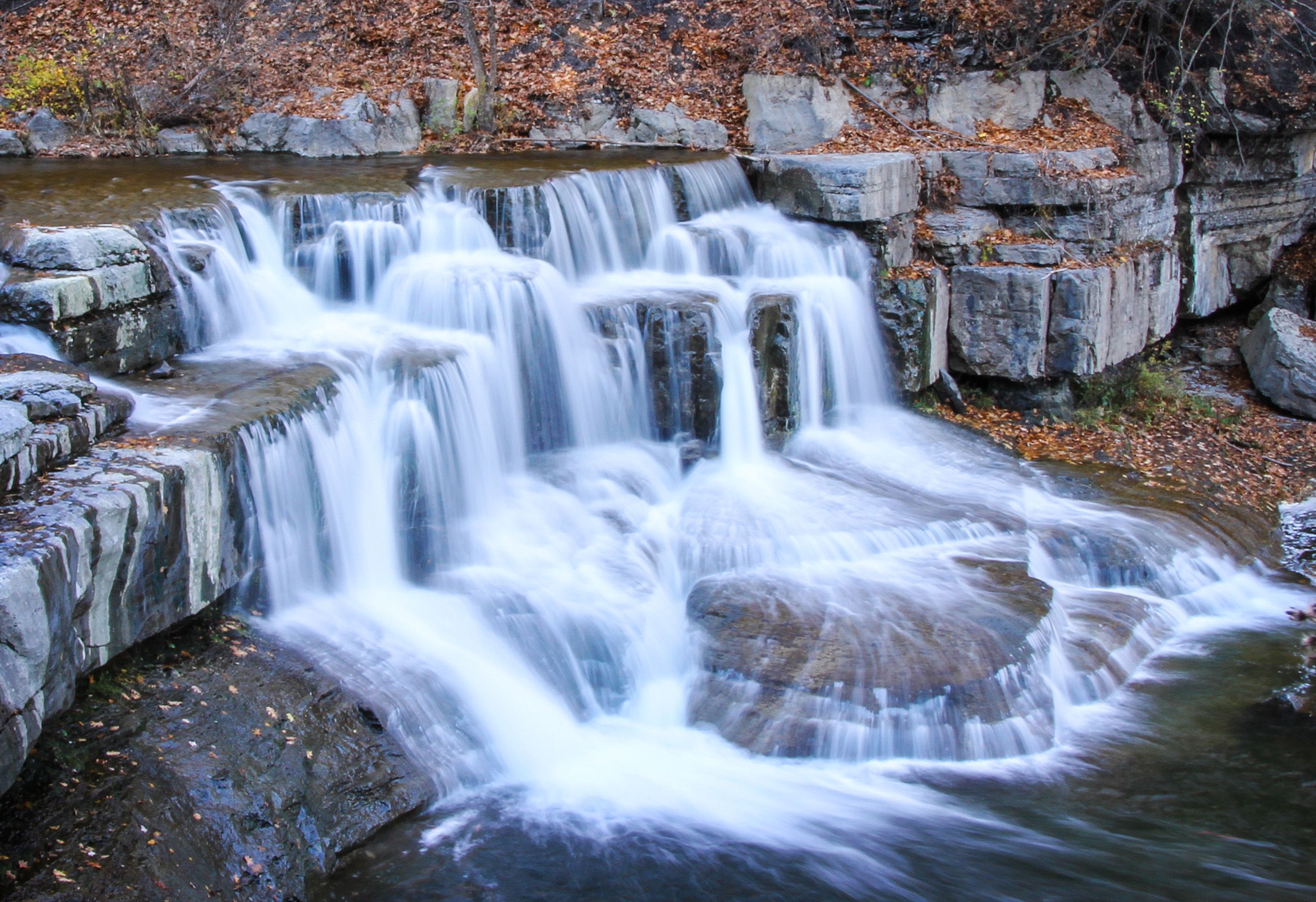
Taller than Niagara. Flat gravel trail, three-quarters of a mile. Shale amphitheater walls two hundred feet high on both sides, and at the end, 215 feet of falling water that makes your camera feel inadequate and your problems feel optional.
Your legs say thank you. Your camera says hell yes.
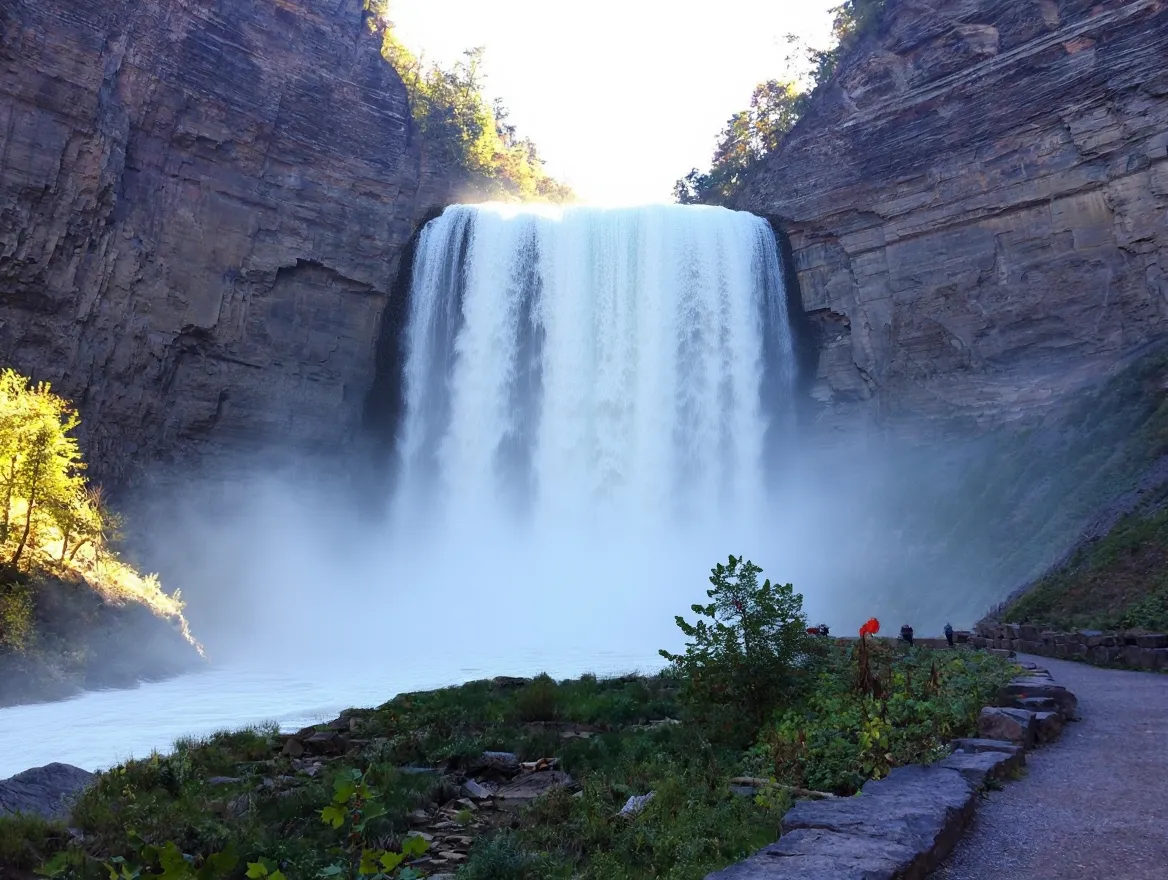
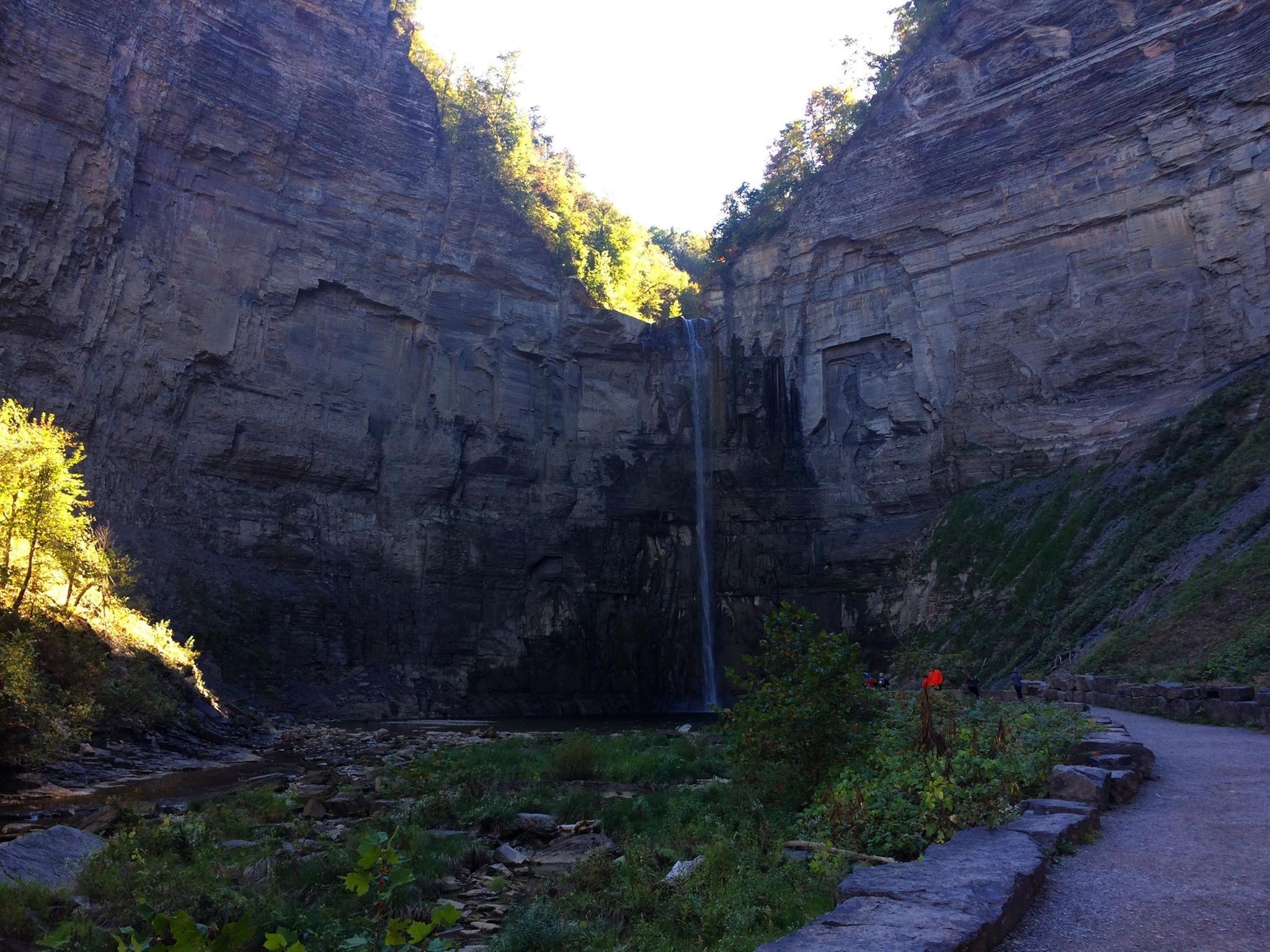
There are more waterfalls within forty-five minutes of this Hampton Inn than most people see in a lifetime. Here are the ones you can actually reach without earning them.
215 ft · 0.75 mi flat trail
Taller than Niagara. Flat gravel trail. Zero excuses.
150 ft · Street-side viewpoint
Walk to the end of a residential street. Turn around. 150 feet of water.
165 ft cascade · 0.2 mi to base pool
Swimming hole at the base. The cascade is the photo, the pool is the reward.
40 ft · 0.3 mi gentle grade
You can walk behind it. Behind it. Do I need to say more.
115 ft cascade · 1.8 mi moderate trail
Best viewed from the stone staircase above. The name is accurate about the climb.
25 ft · Roadside
Pull over, walk ten feet, done. The laziest waterfall on the list.
200 ft over 2 mi · 2 mi gorge trail
800 steps. 19 waterfalls. You'll earn every one of them, and the photos are unreal.
90 ft · 0.5 mi wooded trail
Remote. No crowds. The kind of waterfall you have to yourself.
156 ft · Street-side viewpoint
Right in Montour Falls village. You can see it from the Dollar General parking lot.
30 ft · 0.4 mi easy trail
Inside Fillmore Glen. A rock overhang that looks like it was designed by a set decorator.
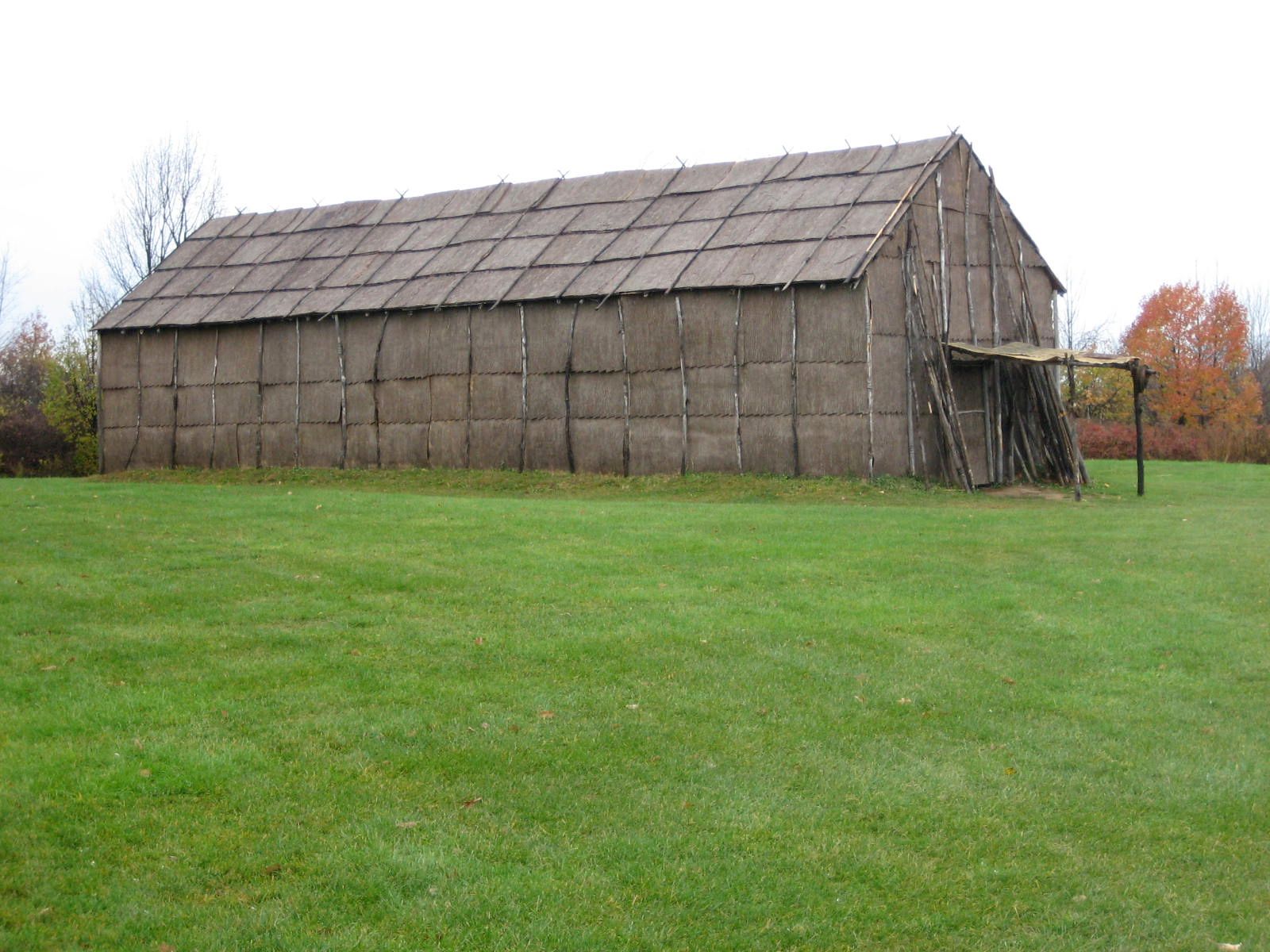
Ganondagan. A seventeenth-century Seneca town site in Victor, New York. National Historic Landmark. Home to the Seneca Art & Culture Center and a full-size bark longhouse replica that stops you in the doorway.
The Haudenosaunee Confederacy governed these lands under the Great Law of Peace — a constitution that Benjamin Franklin studied and that influenced the framework of American democracy. The Skä·noñh Great Law of Peace Center, on the north shore of Onondaga Lake, tells that story with the weight it deserves.
Before these gorges were state parks, they were home.
There are cast-iron markers along Routes 14 and 96 that document what happened to that home. The Sullivan-Clinton Campaign of 1779 — forty towns destroyed, orchards burned, stored food seized heading into winter. The markers are small and easy to miss at fifty miles an hour. That's sort of the point of stopping.
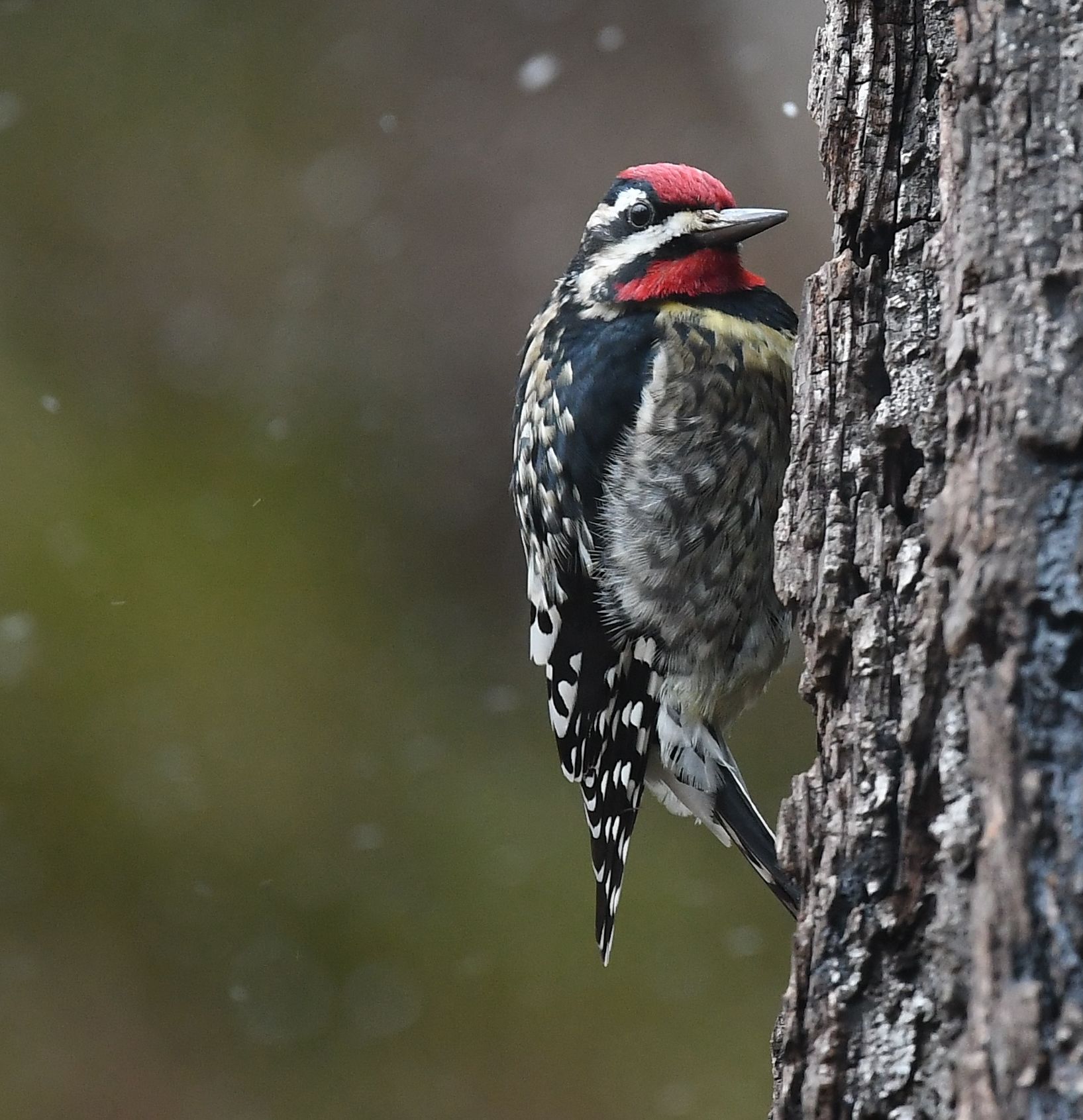
The Cornell Lab of Ornithology is free. Two hundred and twenty acres of flat boardwalk through wetlands and hardwood forest, a visitor center with floor-to-ceiling windows overlooking a pond that attracts more wildlife than a Disney movie, and a Maya Lin sound installation that turns bird calls into visible waveforms. Free. No catch. Just show up.
The Museum of the Earth costs twelve bucks and has a ramp system like a stripped-down Guggenheim spiraling past 4.5 billion years of geological history. There's a mastodon skeleton. The building has air conditioning, which matters more than it should after three days of gorge trails in July.
Corning Museum of Glass is forty-five minutes south and it's the single best museum find from the entire six-AI research project. One model found it. The other five missed it. Three thousand five hundred years of glass art, live glassblowing demos, and a gallery of contemporary pieces that would justify the drive even if the rest of the trip didn't exist. Twenty-two dollars. It's the best museum in the northeastern United States and most people have never heard of it.
The Finger Lakes dining scene is farm-to-table everything, which means you'll eat well even if you just point at a menu. Here's where to point.
Lakefront deck. Fresh catch. The sunset does half the work for the ambiance.
Cash only. Paper plates. The fish fry is why you drove past six other restaurants.
The cookbook is famous. The restaurant is better. Carnivores welcome.
New Orleans in upstate New York. The oysters are correct. The po'boys are aggressive.
On the Commons. Good for the night you want a tablecloth but not a reservation.
Student-run. Cornell hospitality program. The pasta is better than it has any right to be.
CTB. Locals just say the letters. Open early. Coffee is real. Bagels are enormous.
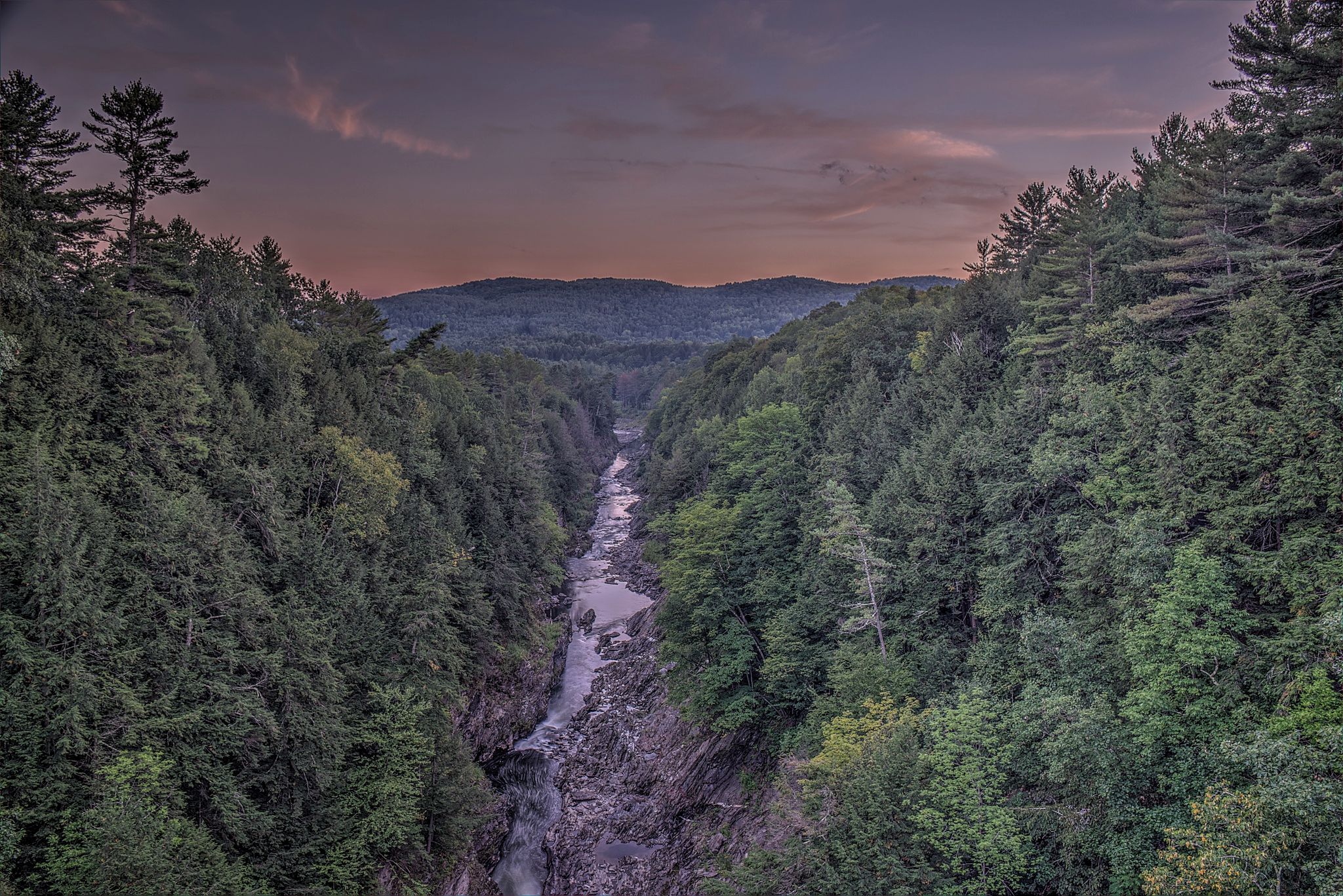
Different route home. East through New York, across the Vermont border, and down through a landscape that trades shale walls for rolling pastures.
Quechee Gorge — Vermont's deepest, 165 feet of glacially carved rock that you can see from a bridge. Woodstock village, where every building looks like it was designed by a committee that agreed on something. The Cornish-Windsor covered bridge, 460 feet, the longest wooden covered bridge in the United States.
You left through Massachusetts mountains. You come home through Vermont valleys. Zero overlap.

Roses are red,
Rabbits are quick,
Now get on your knees,
Happy Valentine's Day!